
ElevenLabs Review: Voiceover Plans, Rights and Retry Costs
ElevenLabs review for recurring voiceover: paid plans, commercial-use conditions, free-retry limits and how to assess approved narration costs.
Editorial disclosure: Official vendor links in this article are direct and untagged. We have not verified an affiliate arrangement or commission attribution for these links. Research scope and limitations are explained in the article.
On this page
Check the stated plan, date and evidence before applying a recommendation to your own workflow.
Quick answer: Start with ElevenLabs when voice generation is a recurring production task and you need to understand credit use and commercial permissions. Starter offers a smaller paid entry point; Creator's promotional first month should not be used as the recurring budget. The main unresolved question is how your chosen voice handles your actual script.
ElevenLabs is worth shortlisting for recurring voiceover production when you need to evaluate a voice workflow across multiple scripts. The buying decision should turn on approved audio, permitted use and revision cost. A long voice list or a polished vendor demo cannot answer those questions on its own.
Method: This is a review of official pricing and support documentation checked on October 21, 2026. We did not run a paid listening comparison or measure generation reliability. Recommendations below are editorial criteria, not test results.

Original ToolPeach editorial diagram. It explains a review process; it is not a product screenshot or measured result.
ElevenLabs plans and intended use
As of 2026-10-21, the pricing page lists Starter at $6 monthly with 30,000 credits, and Creator at a regular $22 monthly with 121,000 credits. The displayed $11 Creator offer is a first-month promotion. These are published USD prices before applicable taxes, not a quote for a particular account.
That distinction matters for a recurring series. A first-month discount may make a pilot cheaper without changing the long-term choice. Decide which capabilities and usage your production needs before selecting the larger allowance.
Commercial permission is an input to production
The commercial-use explanation distinguishes free output from eligible paid-plan output and excludes beta services from the stated commercial permission. It also requires the necessary rights. Check the exact voice, feature and generation period you intend to use; do not assume a later subscription retrospectively clears every earlier file.
For a team, attach that check to the project record. Store who approved the script and voice, which account produced the audio and where the final file will be used. A missing record becomes expensive when a client asks for another language or a revised rights statement.
A useful pilot is deliberately difficult
Choose a short script with your brand name, a model number, a price-like number and one sentence with an intentional pause. Write down the expected pronunciation. Ask reviewers to assess those items before judging whether the voice sounds pleasant.
| Test question | Evidence to keep |
|---|---|
| Are product names intelligible? | Original script and approved pronunciation |
| Does pacing suit the edit? | Final duration and timeline notes |
| Can a correction be made predictably? | Changed text, settings and resulting file |
| What does accepted output cost? | Consumed credits, discarded attempts and accepted seconds |
These are proposed test conditions. We have not filled the table with invented pass rates or listening scores.
Budget for revisions
The regeneration documentation describes conditions for free retries and distinguishes product paths. A changed script or another workflow can change the charging behavior. Check what the generation control actually shows before assuming a revision is free.
Our recommendation is to approve factual copy first, test the difficult passage second and produce the longer script last. Track total consumed credits against audio accepted for publication. An unused allowance is not productive capacity, and a generated minute is not necessarily an approved minute.
Who should evaluate it
Shortlist ElevenLabs when recurring narration or voice experimentation is central to your work and you can run a pronunciation-focused pilot. Compare Murf if editor organization and the surrounding production workflow are equally important. Use the same script and acceptance checklist for both.
We cannot name an audio-quality winner without comparable outputs. The defensible purchase decision is the plan that supports your actual use, permissions and accepted-output cost.
Which retries are actually free?
The official retry guide describes two free retries for eligible web text-to-speech generations when the text, voice and model stay the same, within two hours and without leaving or refreshing the page. It treats the API and Eleven v3 differently: the API does not offer those free regenerations, and v3 charges each generation while returning two outputs.
That makes the product path part of the budget. A producer who edits the wording or moves a web experiment into an API job should recheck the charging rule rather than carrying over the browser allowance.
Sources and update record
Reviewed by the ToolPeach editorial team. Sources and plan details checked October 21, 2026. Prices, allowances and product behavior may change; use the linked official pages and your account terms for a current purchase decision.
- ElevenLabs pricing
- ElevenLabs commercial-use guidance
- ElevenLabs generation and regeneration charging
Link disclosure: The vendor links in this article are direct, untagged links. They do not currently identify a ToolPeach affiliate referral.
Related reading
How we evaluated
- Charts from real data: 1
More from ToolPeach
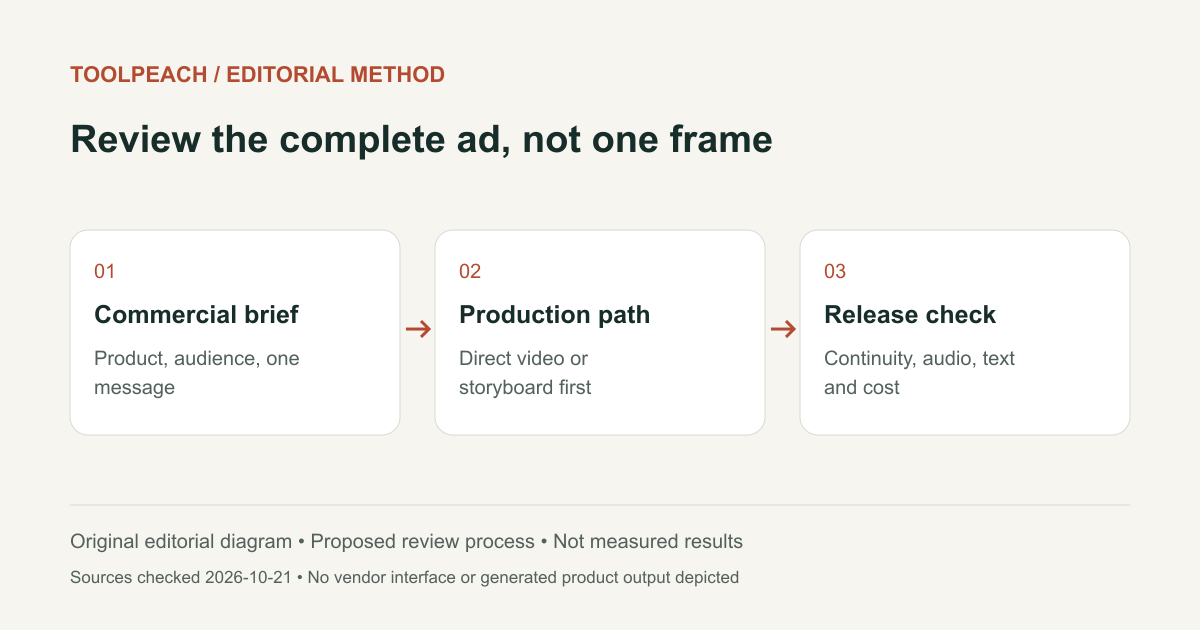
SellPix Video Ads Review: Product Video Workflow and Limits
A related-product review of SellPix Video Ads: direct generation, storyboard planning, product references, quotes, delivery and case provenance.
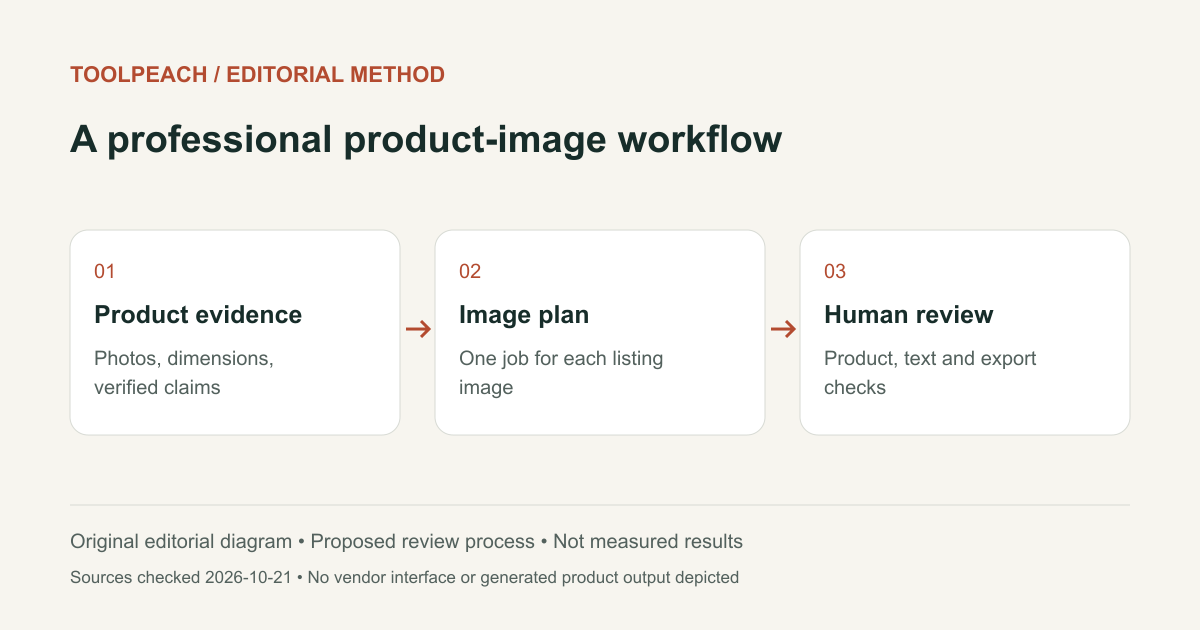
SellPix AI Review: E-commerce Image Workflow and Limits
A related-product review of SellPix AI: listing image planning, Amazon A+ content, localization, editing controls and the checks a seller still needs.
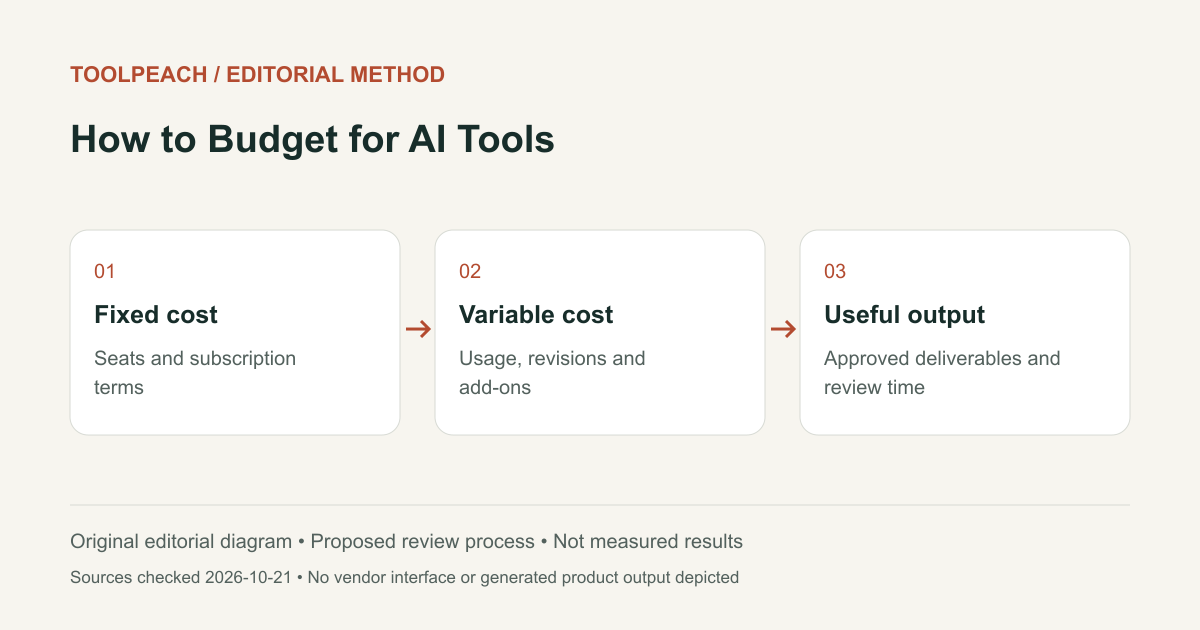
AI Tool Budget: Seats, Credits, Retries and Review Time
Build an AI tool budget around seats, usage, retries and accepted deliverables. Includes a hypothetical cost worksheet and a procurement checklist.